+86-28-82633987
| Catalog No | Product Description | CAS No. | Purity | Structural Formula |
|---|---|---|---|---|
| BP1395 |
Timosaponin AIII
Timosaponin A-III is a natural product found in Anemarrhena asphodeloides. It has a role as a metabolite.
|
41059-79-4 | 98% |

|
| BP0806 |
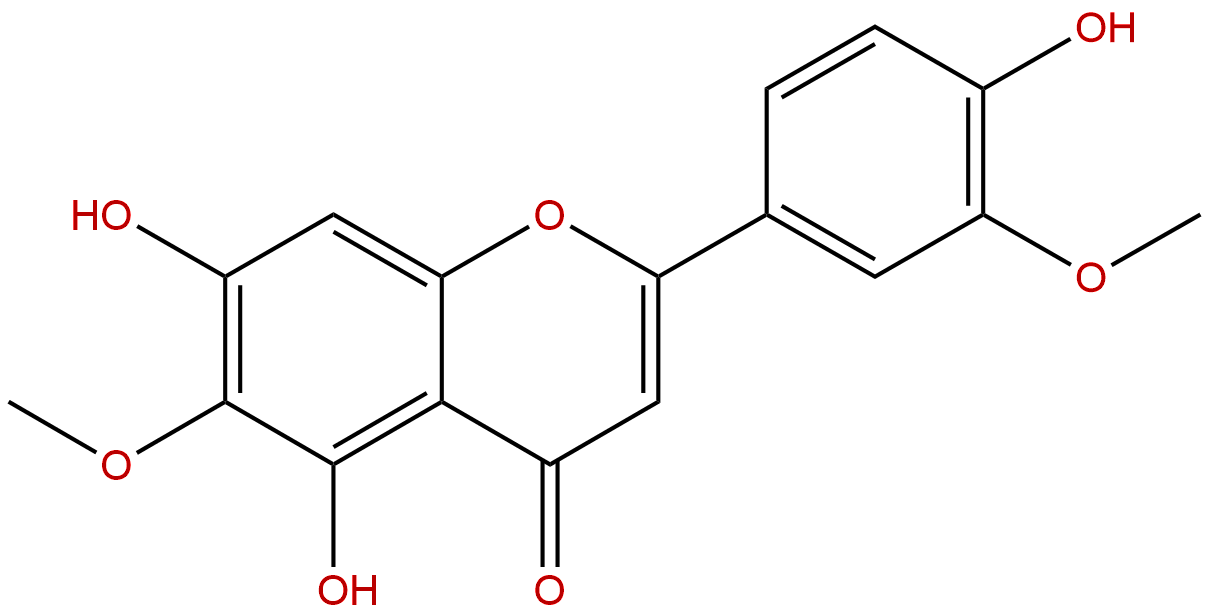
Jaceosidin
Jaceosidin has immunosuppressive, anti-oxidative, anti-inflammatory, and anticancer activities, it is also a microglial inhibitor with anti-neuroinflammation activity. Jaceosidin modulates the ERK/ATM/Chk1/2 pathway, leading to inactivation of the Cdc2-cyclin B1 complex, followed by G2/M cell cycle arrest in endometrial cancer cells. Jaceosidin inhibits T cell proliferation and activation, which is closely associated with its potent down-regulation of the IFN-γ/STAT1/T-bet signaling pathway. Jaceosidin is a trihydroxyflavone that is flavone with hydroxy groups at positions 5, 7 and 4' and methoxy groups at positions 3' and 6. Isolated from Salvia tomentosa and Artemisia asiatica, it exhibits anti-allergic, anti-inflammatory and apoptosis inducing activties. It has a role as a metabolite, an antineoplastic agent, an anti-allergic agent, an anti-inflammatory agent and an apoptosis inducer. It is a dimethoxyflavone and a trihydroxyflavone.
|
18085-97-7 | 98% |
|
| BP0397 |
Corylifol A
Corylifol A is a naturally occurring potent inhibitor of hCE2 and UDP-glucuronosyltransferase 1A1 (UGT1A1); it could be the potential uncouplers of neuronal nitric oxide synthase-postsynaptic density protein-95. Corylifol A displays cytotoxic activity against HepG2 and Hep3B hepatocellular carcinoma cell lines, with IC50 values of 4.6 and 13.5 ug/ml, respectively. Corylifol A has antiinflammatory activity, it shows an inhibitory effect on IL-6-induced STAT3 promoter activity in Hep3B cells with IC50 values of 0.81 ± 0.15 uΜ, it also inhibits STAT3 phosphorylation induced by IL-6 in Hep3B cells.
|
775351-88-7 | 98% |

|
| BP2399 | 698393-97-4 | 98% |

|
|
| BP0083 |
Neochlorogenic acid
Trans-5-O-caffeoyl-D-quinic acid is a cinnamate ester obtained by formal condensation of the carboxy group of trans-caffeic acid with the 5-hydroxy group of quinic acid. It has a role as a plant metabolite. It is a cinnamate ester and a cyclitol carboxylic acid. It is functionally related to a trans-caffeic acid and a (-)-quinic acid. It is a conjugate acid of a trans-5-O-caffeoyl-D-quinate.
Neochlorogenic acid shows antioxidant, antibacterial, antiviral, and antipyretic activities and exerts neuroprotective effects through the inhibition of pro-inflammatory pathways in activated microglia.
Neochlorogenic acid is a natural polyphenolic compound found in dried fruits and other plants. Neochlorogenic acid inhibits the production of TNF - α and IL-1 β. Neochlorogenic acid inhibits the expression of iNOS and COX-2 proteins. Neochlorogenic acid also inhibits the activation of phosphorylated NF - κ B p65 and p38 MAPK.
|
906-33-2 | 98% |

|
| BP0527 |
Eleutheroside E
Eleutheroside E is a glycoside and a lignan.
|
39432-56-9 | 98% |

|
| BP4018 | 146100-02-9 | 98% |

|
|
| SBP02860 |
Moracin O
Moracin O shows significant neuroprotective, and analgesic activities, it also has a strong protective influence against doxorubicin-induced cardiomyopathy in H9c2 cells with the EC50 value of 4.5 ± 1.3 uM. Moracin O exhibits potent in vitro inhibitory activity against hypoxia-inducible factor (HIF-1), which is a key mediator during adaptation of cancer cells to tumour hypoxia.
|
123702-97-6 | 98% |

|
| BP0307 |
Campesterol
Campesterol is a plant sterol with cholesterol lowering and anticarcinogenic effects, it and other plant sterols often decrease LDL cholesterol levels overall. Campesterol has anti-inflammatory effect, it inhibits several pro-inflammatory and matrix degradation mediators typically involved in osteoarthritis- induced cartilage degradation, also sometimes used to treat some specific prostate conditions. Campesterol is a 3beta-hydroxy-Delta(5)-steroid, a C28-steroid, a member of phytosterols and a 3beta-sterol. It has a role as a mouse metabolite. It derives from a hydride of a campestane.
|
474-62-4 | 98% |

|
| BP0639 |
Geraniin
Geraniin is a TNF-α releasing inhibitor with numerous activities including anticancer, anti-inflammatory, has anti-oxidant , and anti-hyperglycemic activities, with an IC50 of 43 μM. Geraniin presents radioprotective effects by regulating DNA damage on splenocytes, exerting immunostimulatory capacities and inhibiting apoptosis of radiosensitive immune cells and jejunal crypt cells. Geraniin induces Nrf2-mediated expression of antioxidant enzymes HO-1 and NQO1, presumably via PI3K/AKT and ERK1/2 signaling pathways, thereby protecting cells from H2O2-induced oxidative cell death.
|
60976-49-0 | 98% |

|
| BP0705 |
Hecogenin
Hecogenin, a steroid saponin isolated from Agave sisalana, is a potent and highly selective inhibitor of UGT1A4 with an IC50 value of 1.5 μM. Hecogenin has anti-cancer, antiproliferative,antioxidant and anti-inflammatory effects, it can protect gastro by K⁺(ATP) channels opening and the COX-2/PG pathway. Hecogenin has inhibition of human rheumatoid arthritis synovial cell survival, the effect is associated with increased apoptosis, p38 mitogen-activated protein kinase activity and upregulation of cyclooxygenase-2.
|
467-55-0 | 98% |

|
| BP4974 |
alpha-Amyrin
Alpha-amyrin is a pentacyclic triterpenoid that is ursane which contains a double bond between positions 12 and 13 and in which the hydrogen at the 3beta position is substituted by a hydroxy group. It is a pentacyclic triterpenoid and a secondary alcohol. It derives from a hydride of an ursane. Alpha-Amyrin is trypsin and chymotrypsin inhibitor,it has antineoplastic,it induces proliferation of human keratinocytes.Alpha-Amyrin can as a hepatomodulatory potent to feasibility for a promising liver curative drug.
|
638-95-9 | 98% |

|
| BP0431 | 2611-67-8 | 98% |

|
|
| BP1394 |
Timosaponin A1
Timosaponin AI can inhibit dipeptidyl peptidase-4 (DPP-4) activity in a dose-dependent manner, the DPP-4 inhibitor has been clinically used for the treatment of type 2 diabetes mellitus.
|
68422-00-4 | 98% |

|
| BPF2304 |
Neoeriocitrin
Neoeriocitrin is a flavanone glycoside that is eriodictyol substituted by a 2-O-(6-deoxy-alpha-L-mannopyranosyl)-beta-D-glucopyranosyl residue at position 7 via a glycosidic linkage. It has a role as a plant metabolite. It is a member of 4'-hydroxyflavanones, a neohesperidoside, a trihydroxyflavanone, a disaccharide derivative and a flavanone glycoside. It is functionally related to an eriodictyol. Neoeriocitrin has antioxidant capacity, it could rescue the inhibition effect of cell differentiation induced by PD98059 to some degree.Neoeriocitrin may be a new promising candidate drug for treatment of osteoporosis.
|
13241-32-2 | 98% |

|
| BP0792 |
Isopimpinellin
Isopimpinellin has chemopreventive effects, it effectively inhibits mouse COH activity (IC50 values 19-40 microM).Isopimpinellin is a new inhibitor against the Leishmania APRT enzyme.
|
482-27-9 | 98% |

|
| BP4006 |
Licoflavone A
Licoflavone A is a member of flavones.
|
61153-77-3 | 98% |

|
| BP0105 |
8-Acetylharpagide
8-O-Acetylharpagide is a glycoside and an iridoid monoterpenoid.
|
6926-14-3 | 98% |

|
| BP0477 |
Demethylzeylasteral
Demethylzeylasteral exhibits strong inhibition towards UDP-glucuronosyltransferase (UGT) 1A6 and 2B7, and the inhibition kinetic parameters (Ki) are calculated to be 0.6 uM and 17.3 uM for UGT1A6 and UGT2B7, respectively. Demethylzeylasteral has antimicrobial, strong immunosuppressive, and antifertility activities; it concentration-dependently and in a partially reversible manner can inhibit the Ca(2+) current in spermatogenic cells with an IC(50) of 8.8 microg/ml, and it also can inhibit significantly the sperm acrosome reaction initiated by progesterone. Demethylzeylasteral is a carbopolycyclic compound with formula C29H36O6, originally isolated from Tripterygium wilfordii. It has a role as an EC 2.4.1.17 (glucuronosyltransferase) inhibitor, an immunosuppressive agent, an anti-inflammatory agent, a nephroprotective agent and a plant metabolite. It is a member of benzenediols, an arenecarbaldehyde, a carbopolycyclic compound, an oxo monocarboxylic acid, a cyclic ketone and an enone.
|
107316-88-1 | 98% |

|
| BPF0598 |
Trachelogenin
Trachelogenin has antiproliferative effect, the mechanism is related to affect the phosphorylation of key proteins such as β-Catenin, c-Myc and GSK3 in the β-Catenin signaling pathway in a concentration-dependent manner.
|
34209-69-3 | 98% |

|




 Shenshuai
 Wenjing
 Hedandan






