+86-28-82633987
| Catalog No | Product Description | CAS No. | Purity | Structural Formula |
|---|---|---|---|---|
| BP0806 |
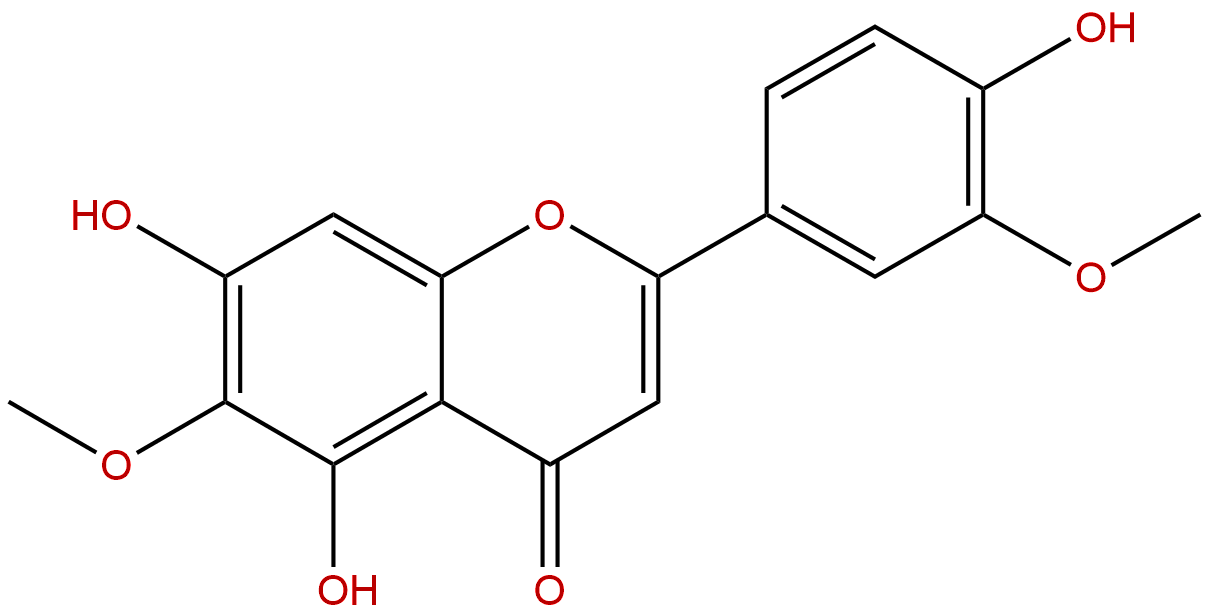
Jaceosidin
Jaceosidin has immunosuppressive, anti-oxidative, anti-inflammatory, and anticancer activities, it is also a microglial inhibitor with anti-neuroinflammation activity. Jaceosidin modulates the ERK/ATM/Chk1/2 pathway, leading to inactivation of the Cdc2-cyclin B1 complex, followed by G2/M cell cycle arrest in endometrial cancer cells. Jaceosidin inhibits T cell proliferation and activation, which is closely associated with its potent down-regulation of the IFN-γ/STAT1/T-bet signaling pathway. Jaceosidin is a trihydroxyflavone that is flavone with hydroxy groups at positions 5, 7 and 4' and methoxy groups at positions 3' and 6. Isolated from Salvia tomentosa and Artemisia asiatica, it exhibits anti-allergic, anti-inflammatory and apoptosis inducing activties. It has a role as a metabolite, an antineoplastic agent, an anti-allergic agent, an anti-inflammatory agent and an apoptosis inducer. It is a dimethoxyflavone and a trihydroxyflavone.
|
18085-97-7 | 98% |
|
| BP1323 |
Solasonine
Solasonine displays leishmanicidal activity against promastigote forms of L. amazonensis. Solasonine is a steroid, an azaspiro compound and an oxaspiro compound.
|
19121-58-5 | 98% |

|
| SBP03357 |
β-Tocopherol
Beta-tocopherol is a tocopherol in which the chroman-6-ol core is substituted by methyl groups at positions 5 and 8. While it is found in low concentrations in many vegetable oils, only cottonseed oil contains significant amounts. It has a role as a plant metabolite and a food component. It is a tocopherol and a vitamin E.
|
148-03-8 | 98% |

|
| BP1347 |
Sulforaphane
Sulforaphane is a cruciferous vegetable-derived isothiocyanate with promising antitumor, chemopreventive and therapeutic activities, it inhibits TPA-induced NF-κB activation and COX-2 expression in MCF-10A cells by blocking two distinct signaling pathways mediated by ERK1/2-IKKα and NAK-IKKβ. Sulforaphane may exert a significant neuroprotective effect on cholinergic deficit and cognitive impairment, it also has anti-inflammatory effect, at least ,in part,associated with interfering with the NF-κB pathway. (R)-sulforaphane is a sulforaphane in which the sulfinyl group has R configuration. Naturally occurring compound found in brocolli that acts as a potent inducer of phase II detoxification enzymes. It is an enantiomer of a (S)-sulforaphane.
|
142825-10-3 | 98% |

|
| BP0796 |
Isorhamnetin-3-O-beta-D-Glucoside
Isorhamnetin 3-O-beta-D-glucopyranoside is a glycosyloxyflavone that is isorhamnetin substituted at position 3 by a beta-D-glucosyl residue. It has a role as a metabolite. It is a beta-D-glucoside, a monomethoxyflavone, a trihydroxyflavone, a glycosyloxyflavone and a monosaccharide derivative. It is functionally related to a beta-D-glucose and an isorhamnetin.
|
5041-82-7 | 98% |

|
| BP4393 |
Lirinidine
(+)-Lirinidine has antioxidative activity, and it can significantly inhibit the proliferation of melanoma cells; it also shows potent inhibition of melanogenesis. Lirinidine exhibits significant inhibition of collagen, arachidonic acid and platelet activating factor-induced platelet aggregation.
|
54383-28-7 | 98% |

|
| BP0427 |
Cyanidin-3-O-galactoside chloride
Cyanidin 3-O-beta-D-galactoside chloride is a memeber of the class of anthocyanin chlorides that has cyanidin 3-O-beta-D-galactoside as the cationic counterpart. It contains a cyanidin 3-O-beta-D-galactoside. Cyanidin-3-O-galactoside chloride has anti-obesity and hypolipidemic effects.
|
27661-36-5 | 98% |

|
| BP0338 |
Chebulagic acid
Chebulagic acid is a potent DNA topoisomerase inhibitor, and is also COX-2 and 5-LOX dual inhibitor. Chebulagic acid may be of value as broad-spectrum antivirals for limiting emerging/ recurring viruses known to engage host cell glycosaminoglycans for entry. Chebulagic acid can be used to control blood glucose and manage type 2 diabetes, although clinical trials are needed.
|
23094-71-5 | 98% |

|
| BP1260 |
Schaftoside
Schaftoside is a C-glycosyl compound that is apigenin substituted by beta-D-glucopyranosyl and an alpha-L-arabinopyranosyl moieties at positions 6 and 8 via C-glycosidic linkages. It has a role as an antioxidant and an antinematodal drug. It is a C-glycosyl compound and a trihydroxyflavone. It is functionally related to an apigenin. Schaftoside has antioxidant activity, it also can inhibit phospholipase, lipoxygenase and cyclooxygenase, three pro-inflammatory enzymes.
|
51938-32-0 | 98% |

|
| BP1277 |
Scutellarein
Scutellarein has antioxidant, antitumor, anti-adipogenic, antiviral and anti-inflammatory activities, it can improve neuronal injury, has better protective effect in rat cerebral ischemia. Scutellarein may serve as a SARS-CoV chemical inhibitor, it also exerts strong inhibition towards the tested UDP-glucuronosyltransferase isoforms. Scutellarein is flavone substituted with hydroxy groups at C-4', -5, -6 and -7. It has a role as a metabolite. It is functionally related to an apigenin. It is a conjugate acid of a scutellarein(1-).
|
529-53-3 | 98% |

|
| BP1097 |
Picrocrocin
Picrocrocin is a beta-D-glucoside of beta-cyclocitral; the precursor of safranal. It is the compound most responsible for the bitter taste of saffron. It is functionally related to a beta-cyclocitral.
|
138-55-6 | 98% |

|
| BP0611 |
Gallocatechin gallate
(-)-gallocatechin gallate is a gallate ester obtained by formal condensation of the carboxy group of gallic acid with the (3R)-hydroxy group of ()-gallocatechin. A natural product found in found in green tea. It has a role as an EC 3.4.22.69 (SARS coronavirus main proteinase) inhibitor, an antineoplastic agent, a plant metabolite and a human xenobiotic metabolite. It is a catechin, a polyphenol and a gallate ester. It is functionally related to a gallic acid and a (-)-gallocatechin. Gallocatechin gallate has strong antioxidative, and anti-obesity activities, it inhibits 3T3-L1 differentiation and lipopolysaccharide induced inflammation through MAPK and NF-κB signaling; it also may have anti-diabetic effects by increasing sensitivity of insulin. Gallocatechin gallate can decrease osteoclastogenesis at 20 microM, it has positive effects on bone metabolism through a double process of promoting osteoblastic activity and inhibiting osteoclast differentiations.
|
4233-96-9 | 98% |

|
| BP3975 |
Salviaflaside
Salviaflaside has antioxidant activity.
|
178895-25-5 | 98% |

|
| BP4191 | 1973415-50-7 | 98% |

|
|
| BP1224 |
Rosmarinic acid
Rosmarinic acid has antiviral, antibacterial, antiinflammatory, neuroprotective, anticancer, anti-lipid peroxidative, apoptotic,and antioxidant activities. It is used for food preservation, and to treat peptic ulcers, arthritis, cataract, cancer, rheumatoid arthritis, bronchial asthma, and several human neurodegenerative diseases caused by oxidative stress. Rosmarinic acid has the ability to block complement fixation, inhibit lipoxygenase and cyclooxygenase activity and inhibit the expression of CCL11 and CCR3 by suppressing the IKK-β activity in NF-κB activation signaling. It inhibits MAO-A, MAO-B and COMT enzymes with IC50s of 50.1, 184.6 and 26.7 μM, respectively. (R)-rosmarinic acid is a stereoisomer of rosmarinic acid having (R)-configuration. It has a role as a geroprotector and a plant metabolite. It is a conjugate acid of a (R)-rosmarinate. It is an enantiomer of a (S)-rosmarinic acid.
|
20283-92-5 | 98% |

|
| BP3089 |
Bruceine A
Bruceine A has antibabesial activity, it can inhibit the in vitro growth of Babesia gibsoni in canine erythrocytes at lower concentration and kill the parasites within 24 hr at a concentration of 25 nM; it show strong antitrypanosomal activities with IC(50) values in the range of 2.9-17.8nM. Bruceine A has anthelmintic activity, it exhibits significant activity against Dactylogyrus intermedius with EC(50) values of 0.49 mg/L. Bruceine A exhibits NF-κB p65 inhibition, and cytotoxic potential against HT-29, HeLa, and HL-60 cells .
|
25514-31-2 | 98% |

|
| BP0345 |
Chlorogenic acid
Chlorogenic acid, a phenolic compound found ubiquitously in plants, is an antioxidant and metal chelator, it has antiviral activity by inhibiting HBV replication, it inhibits the inflammatory reaction in HSE via the suppression of TLR2/TLR9-Myd88 signaling pathways. Some derivatives of chlorogenic acid are hypoglycemic agents and may affect lipid metabolism, chlorogenic acid can improve glucose tolerance, decrease some plasma and liver lipids, and improve mineral pool distribution in vivo. Chlorogenic acid is a cinnamate ester obtained by formal condensation of the carboxy group of trans-caffeic acid with the 3-hydroxy group of quinic acid. It is an intermediate metabolite in the biosynthesis of lignin. It has a role as a plant metabolite and a food component. It is a tannin and a cinnamate ester. It is functionally related to a trans-caffeic acid and a (-)-quinic acid. It is a conjugate acid of a chlorogenate.
|
327-97-9 | 98% |

|
| BP1384 |
Theaflavin
Theaflavin is a suitable natural inhibitor against influenza A (H1N1) neuraminidase, which has anti-inflammatory, antioxidative, anti-mutagenic, anti-HSV-1, and anti-carcinogenic properties. Theaflavin is active in the prevention of fatty liver and obesity, it can significantly reduce lipid accumulation, suppress fatty acid synthesis, and stimulate fatty acid oxidation. Theaflavin inhibits LPS-Induced IL-6, MCP-1, and ICAM-1 expression in bone marrow-derived macrophages through the blockade of NF-κB and MAPK signaling pathways; it also protects nigral dopaminergic neurons against chronic MPTP/probenecid induced Parkinson's disease. Theaflavin is a biflavonoid that is 3,4,5-trihydroxybenzocyclohepten-6-one which is substituted at positions 1 and 8 by (2R,3R)-3,5,7-trihydroxy-3,4-dihydro-2H-chromen-2-yl groups. It is the main red pigment in black tea. It has a role as an antioxidant, an antibacterial agent, a chelator, a radiation protective agent and a plant metabolite. It is a polyphenol and a biflavonoid.
|
4670-05-7 | 98% |

|
| BP3285 | 112693-21-7 | 98% |

|
|
| BP0746 |
Hydroxytyrosol
Hydroxytyrosol is a member of the class of catechols that is benzene-1,2-diol substituted by a 2-hydroxyethyl group at position 4. Isolated from Olea europaea, it exhibits antioxidant and antineoplastic activities. It has a role as an antioxidant, a metabolite and an antineoplastic agent. It is a primary alcohol and a member of catechols. It is functionally related to a 2-(4-hydroxyphenyl)ethanol.
|
10597-60-1 | 98% |

|




 Shenshuai
 Wenjing
 Hedandan






